Friday, April 03, 2009

Which is Better? Migrating and Reusing Applications or Rewriting/Installing ...


Sent to you by Sparkie via Google Reader:


This live webcast will explore the differences between rewriting/installing packaged applications versus modernizing and migrating applications to contemporary platforms such as Unix, Linux, Windows. You will find out: * Which can complete key batch business processes in half the time? * Which can increase online transactions processing? * Which can help you save your department by up to 95 percent in operating costs? Learn how Co-op Financial Services completed their migration project on-time and on budget with a dramatic 95 percent reduction in operating costs of a core system at the webcast. You'll find out how re-using existing application business logic minimizes and automates any required change resulting in a solution far safer than rewriting applications or installing off-the-shelf packages. You'll also learn how this approach allows the integration of Web services and SOA avoiding costly rewrites and extending the ROI of existing applications. Which method do you think is better? Register now to learn more. Event Date: Tuesday, April 14 at 1:00 pm EDT/10:00 am PDT


Things you can do from here:


My next home


Sent to you by Sparkie via Google Reader:


via MAKE Magazine by Gareth Branwyn on 4/3/09

cargo-container.jpg
cargo-container2.jpg


I LOVE this cargo container home, spotted on New World Geek. I could so live in that thing, provided I owned all the land beyond that window and my property was protected by a high fence, 'cause otherwise, it's curtains (which would blown the whole effect). Exhibitionist Estates -- coming soon to a development near you.


Recycled cargo container buildings

Read more | Permalink | Comments | Read more articles in Green | Digg this!


Things you can do from here:


Windows Home Server Gets Powered Up With PP2


Sent to you by Sparkie via Google Reader:


Microsoft's Windows Home Server got a boost with the release of Power Pack 2 (PP2), which became available to Microsoft Developer Network subscribers.


Things you can do from here:


Fault Tolerant Virtual Servers in 10 Minutes or Less


Sent to you by Sparkie via Google Reader:


Join HP, Citrix and Marathon Technologies for this live webinar discussing a tightly integrated virtualization solution featuring Citrix Essentials for XenServer, HP ProLiant Servers and Marathon EverRun. This enterprise server virtualization solution is fast to deploy, easy to manage and "always on" for business and mission critical applications. Find out why together HP, Citrix & Marathon provide an optimized virtualization solution for enterprise organizations with the most demanding needs. Attend this webinar and learn how HP, Citrix & Marathon provide: -- Fast, straightforward virtual deployments –"10 minutes to Xen" -- Simplified virtualization management. -- Zero downtime, zero data loss for critical applications running in fault tolerant virtual machines. -- Consistent, reliable HP ProLiant server experience – via the unique integration of Citrix Essentials for XenServer with HP Insight Management. Event Date: Thirsday, April 16 at 1:00 pm EDT/10:00 am PDT


Things you can do from here:


Free stories from anthology of "galactic" science fiction


Sent to you by Sparkie via Google Reader:


via Boing Boing by Cory Doctorow on 4/2/09

John Joseph Adams sez, "My new anthology, Federations, is due out in a few weeks, and I've just launched the website for it. The website has three free stories on it, from current Hugo & Nebula finalist James Alan Gardner, Jeremiah Tolbert, and Genevieve Valentine. There are also several interviews with those authors and other authors in the book."
From Star Trek to Star Wars, and from Dune to Foundation, science fiction has a rich history of exploring the idea of vast interstellar societies, and the challenges facing those living in or trying to manage such societies.

The stories in Federations continue that tradition, and herein you would find a mix of all-new, original fiction, alongside selected reprints from authors whose work exemplifies what interstellar SF is capable of, including Lois McMaster Bujold, Orson Scott Card, Anne McCaffrey, George R. R. Martin, L. E. Modesitt, Jr., Alastair Reynolds, Robert J. Sawyer, Robert Silverberg, Harry Turtledove, and many more.

About the Anthology

Pre-order Federations

(Thanks, John!)


Things you can do from here:


Thursday, April 02, 2009

Facebook API for Flash/Actionscript AS3


Sent to you by Sparkie via Google Reader:


via MAKE Magazine by Jason Striegel on 4/2/09

flash_facebook.jpg

A couple weeks ago, I wrote about Pieter Michels' Flash bridge for Facebook Connect that allows you to access Facebook Connect services from within a Flash application. This week, Adobe and Facebook decided to release an official version of an AS3 Facebook API, so now there's an officially supported, feature complete way to access Facebook from a Flash-based Connect web site, a Facebook platform application, or a standalone AIR application.

There's decent library documentation provided by Adobe, but I recommend just digging in and examining the sample code that's been provided. It'll give you a better overview of the primary classes you'll be using and the initial steps you need to go through to authenticate and pass user data to and from Facebook.

Actionscript 3.0 Client for the Facebook Platform API
Flash for Facebook Overview and Code Samples
Facebook ActionScript API Documentation

Read more | Permalink | Comments | Read more articles in hacks | Digg this!


Things you can do from here:


Ham Radio Peak


Sent to you by Sparkie via Google Reader:


via DX World of Ham Radio by DX World on 4/1/09


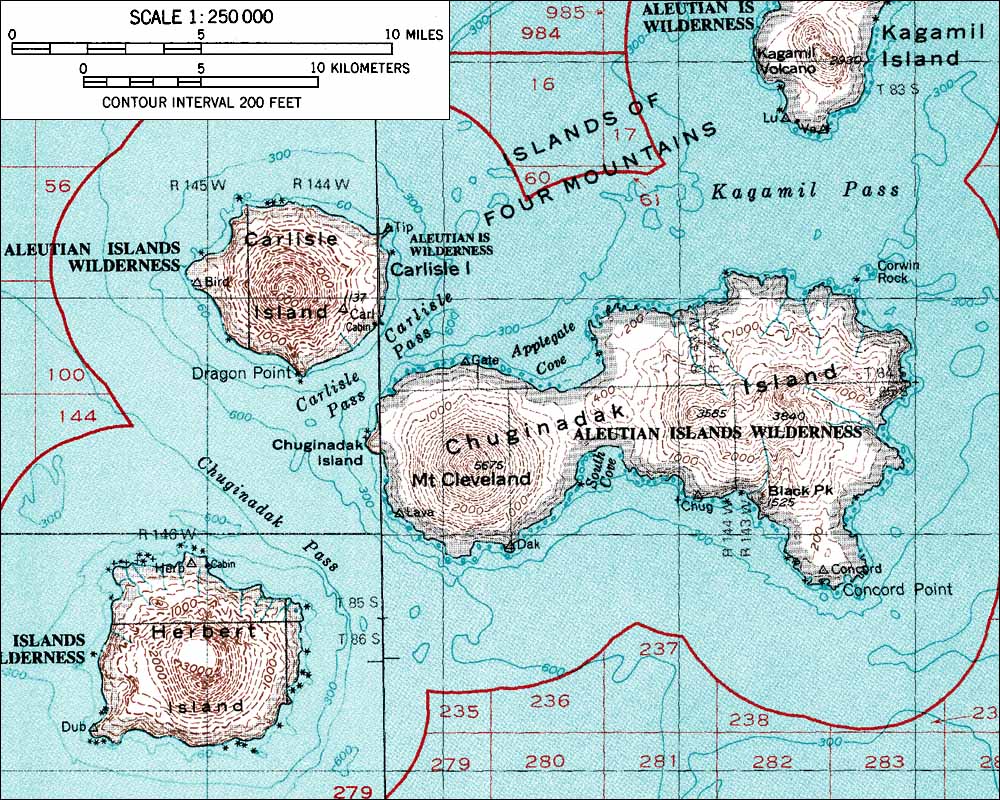
chuginadak_map

During KL7DX Cleveland volcano DXpedition in 2008 team members Sergey Morozov RA3NAN, Yuri Zaruba UA9OBA and Yuri Shuskin N3QQ stumbled across an interesting fact while looking at the map of Chuginadak Island: "un-named mountain".

Look at the map of Chuginadak and you will see it is the highest Eastern point of the island at ~3840ft. Yuri Zaruba made a trip all the way to the top. Took him 11 hours. Last 3 minutes of this video show his efforts.

After long discussions, the idea is to name it "Ham Radio Peak" to commemorate all Ham radio operators public service during national disasters as well as raise awareness about our hobby.

Few potential roadblocks.

  • Island is part of Alaska Maritime Wildlife Refuge. New names rarely given. Exception: Educational purpose.
  • No local population who may support new name. Uninhabited island.

Yuri mentions that paperwork is now ready to be submitted to U.S. Board on Geographic Names, however, to further support KL7DX's goal email N3QQ @ NA-234 dot com with your name/call/mailing address and statement why the U.S. Board on Geographic Names should consider and approve the application.

Yuri Sushkin
N3QQ & KL7DX team


Things you can do from here:


Wednesday, April 01, 2009

Microsoft to release VB6 as Open Source


Sent to you by Sparkie via Google Reader:


via DotNetSlackers Latest ASP.NET News by Guy Barrettes WebLog on 3/31/09

After many years of complaints from the VB6 developers around the world, Microsoft has finally agreed to re release VB6, not as a full product, but as a full featured, not crippled free Open Source product with source code on CodePlex. Developers around the world should rejoice at the prospect of writing again good old VB6 apps that use ADO to connect to Access databases. Feeling the possible wrath of the C# community that will feel abandoned by this bold move, Microsoft will also create a VB6...

Did you know that DotNetSlackers also publishes .net articles written by top known .net Authors? We already have over 80 articles in several categories including Silverlight. Take a look: here.


Email this Article


Things you can do from here:


Ubuntu UK Podcast: S02E01 - The Return


Sent to you by Sparkie via Google Reader:


via Planet Ubuntu by Ubuntu UK Podcast on 4/1/09

Ciemon Dunville, Alan Pope, Tony Whitmore, Dave Walker and Producer Laura Cowen in a new episode of the Ubuntu Podcast from the UK Local Community Support Team.

In this the first episode of the second season we return with a slightly changed format. We're trying to reduce our workload by recording more 'live' and doing less editing and post processing. We're hoping this won't reduce the quality that you've come to know and love in our little podcast.

In addition we've opened channels of communication by taking comments via twitter and identi.ca whilst we record the show. We think this will improve the immediacy of the show and help people to get involved. Of course we welcome your feedback on these changes. Apologies in advance for grouping together all twitter and identica feedback as "twitter". The relavent parties have been fired.
In this weeks show:-

  • A catch up with what the presenters have been doing whilst the podcast has been taking a break
  • Tony and Laura interview Scott James-Remnant from Canonical about some of his projects
  • A discussion about what's coming up in Ubuntu Jaunty (9.04)
  • The News
  • We announce some upcoming events:-
  • A new competition to win some Ubuntu goodies including an exclusive 'Ubuntu Guru' T-shirt, a copy of the great Ubuntu Kung-Fu book by Keir Thomas, stickers, an Ubuntu hat, bamboo lanyards, Google notebooks and anything else we can find! Email competition@ubuntu-uk.org with your answer before Monday 13th April.
  • And finally we cover your emails, tweets and dents since our last show. Unfortunately we didn't get time to play a track Syed Ali sent us composed of samples sent to him by Richard Stallman.

Comments and suggestions are welcomed to: podcast@ubuntu-uk.org
Up to 30 seconds of voicemail can be left at +44 (0) 845 508 1986
Follow our twitter feed http://twitter.com/uupc
Follow us on Identi.ca http://identi.ca/uupc
Discuss this episode in the Forums

Ciemon Dunville, Alan Pope, Tony Whitmore, Dave Walker and Producer Laura Cowen in a new episode of the Ubuntu Podcast from the UK Local Community Support Team. In this the first episode of the second season we return with a slightly changed format. We're trying to reduce our workload by recording more 'live' and doing less editing and post processing. We're hoping this won't reduce the quality that you've come to know and love in our little podcast. In addition we've opened channels of communication by taking comments via twitter and identi.ca whilst we record the show. We think this will improve the immediacy of the show and help people to get involved. Of course we welcome your feedback on these changes. Apologies in advance for grouping together all twitter and identica feedback as "twitter". The relavent parties have been fired. In this weeks show:- A catch up with what the presenters have been doing whilst the podcast has been taking a break Ciemon has been phoning himself with Asterisk (with the help of a free book) and rejecting mice with Crunchbang Linux Dave has been stretching his leadership muscle with the Ubuntu UK LoCo Team Alan has booted himself over a network with PXE and the Net install image and has played with Blender as a video editor Tony has been playing with Easy Peasy on his new Acer Aspire One, and recently helped judge the Ubuntu Free Culture Showcase Tony and Laura interview Scott James-Remnant from Canonical about some of his projects A discussion about what's coming up in Ubuntu Jaunty (9.04) The News We announce some upcoming events:- April 23rd - Worldwide, Ubuntu Jaunty Jackalope releases. Join #ubuntu-release-party on the day to celebrate online. April 23rd - London, Southern UK Jaunty Release Party April 24th - Manchester, Midlands UK Jaunty Release Party June 13th - Clemson, South Carolina, South East Linux Fest A new competition to win some Ubuntu goodies including an exclusive 'Ubuntu Guru' T-shirt, a copy of the great Ubuntu Kung-Fu book by Keir Thomas, stickers, an Ubuntu hat, bamboo lanyards, Google notebooks and anything else we can find! Email competition@ubuntu-uk.org with your answer before Monday 13th April. And finally we cover your emails, tweets and dents since our last show. Unfortunately we didn't get time to play a track Syed Ali sent us composed of samples sent to him by Richard Stallman. Comments and suggestions are welcomed to: podcast@ubuntu-uk.org Up to 30 seconds of voicemail can be left at +44 (0) 845 508 1986 Follow our twitter feed http://twitter.com/uupc Follow us on Identi.ca http://identi.ca/uupc Discuss this episode in the Forums


Things you can do from here:


It Seems to Us: Keeping the "Amateur" in Amateur Radio


Sent to you by Sparkie via Google Reader:


Being called an amateur can have a negative connotation, but the term's origin is the Latin word for "lover" and it has to do with motivation, not skill level. As they say, professionals built the Titanic; the Ark was built by amateurs.


Things you can do from here:


Tuesday, March 31, 2009

Volunteers Locked Away in Mock Mars Mission


Sent to you by Sparkie via Google Reader:


via SPACE.com on 3/31/09

Six volunteers locked themselves in metal tubes Tuesday in mock 105-day mission to Mars.


Things you can do from here:


Mt. Redoubt Volcano, Alaska


Sent to you by Sparkie via Google Reader:


via NASA Earth Observatory on 3/31/09

On March 26, 2009, Redoubt Volcano sent a column of ash some 19,800 meters (65,000 feet) above sea level, and sent a lahar through the Drift River Valley.


Things you can do from here:


Monday, March 30, 2009

Microsoft Web?

Microsoft is beginning to present new web based tools for development that would cross operating systems. You can access it at the following url: http://www.eweek.com/c/a/Application-Development/Microsoft-Preps-Open-Source-Apps-Marketplace-139139/

Sunday, March 29, 2009

Grand Terrace, CA to Discuss Ham Radio Antenna Restrictions:


Sent to you by Sparkie via Google Reader:


via eHam.net News on 3/10/09

Grand Terrace: Nearly four years after riled-up neighbors demanded action, the city is preparing to place controls on ham radio antennae. The City Council at 6 p.m. tonight will consider regulations intended to appease residents and ham radio operators at odds over the issue. The proposed standards, which were hammered out in public workshops going back to 2006, prohibit amateur radio antennae more than 35 feet tall. No more than three antennae would be allowed on each building site. The antennae must be placed in a way that minimizes the extent to which the structure is visible to nearby residents and the general public. Antennae up to 35 feet are subject to a $50 application fee and may be allowed if development standards are met. If city officials deny the request, the decision can be appealed to the Planning Commission and subsequently to the City Council at no cost.


Things you can do from here:


Getting Around the 4MB Limit in ASP.NET


Sent to you by Sparkie via Google Reader:


via DotNetSlackers Latest ASP.NET News by DevX: .NET Feed on 3/9/09

ASP.NET does not allow you to upload a file greater than 4MB to the server. There is an easy fix to this problem....

Did you know that DotNetSlackers also publishes .net articles written by top known .net Authors? We already have over 80 articles in several categories including Silverlight. Take a look: here.


Email this Article


Things you can do from here:


Conficker Malware to Return April 1

Dear Sparkie,

Roy (lrhanna@gmail.com) wants you to read
the following article .

Conficker Malware to Return April 1
Alex Goldman
03/29/2009


This article can be found online at the following location:
http://itmanagement.earthweb.com/secu/article.php/3812611/Conficker-Malware-to-Return-April-1.htm

As the code also known as Conficker, Downadup, Kido, Confick and the April Fool's Day worm starts its countdown, security vendors are cautioning users that if they've implemented basic security on your home computer or network, they'll be fine.

Others, however, face risk from a worm that's spread rapidly and without a clear indication of its purpose, they told InternetNews.com.

"It's important for users to apply the known, basic, common-sense steps to protect themselves, even in light of increasing and increasingly sophisticated attacks," said Jenko Hwong, director of security products for security appliance vendor Mirapoint.
"Conficker.C and April 1st won't bring Armageddon."

For most users, that involves using up-do-date software and security tools.

Email Article
Print Article
Comment on this article

Share Articles

* Digg

* del.icio.us

* Newvine

initArticleMenu(document.getElementById("toolBoxShareMenu"));

"If you have a legal copy of Microsoft Windows, you have invested ... in antivirus software, or you pay your service provider for secured Internet access -- most likely you are safe," said Ron Meyran, product manager for security for application delivery and network security vendor Radware. "The same applies for enterprise networks: Your corporate policy should cover such cases."

Nevertheless, the worm has still managed to spread widely. David Perry, global director of education at antivirus firm Trend Micro, told Internetnews.com several months ago that he believes about 10 million PCs have been hit.

Many of the infected PCs are inadequately defended. "If you run an illegal copy of Windows, your antivirus (if any) is a freeware, you are a DSL or cable subscriber and you never disconnect -- then you are the ideal target for self propagating viruses such as Conficker," Radware's Meyran said.

"And it will not be he first time your computer is recruited into a botnet, he said. "In fact, there is a good chance that you already host malware of more than one botnet."

Related Articles

* IE 8 Release: Successful, with a Few Bugs
* Online Backup: How to Pick the Best
* Hacking iPhone 3.0 for Fun and Profit

Owners of many infected PCs won't know they're infected until April 1, added Trend Micro's Perry. "It's hard to spot Conficker's work."

Experts don't know what the worm will do on April 1, but they have some educated guesses. Tal Golan, founder and CTO of antispam appliance vendor Sendio, said that the worm will likely send out e-mail containing spam or malware, but that the e-mail will be a "smoke
screen masking the real targets of the worm or virus."

All of the experts that InternetNews.com contacted agreed that Conficker's spread shows that many organizations are not up to date on their patches: The worm exploits a well-known vulnerability, published by Microsoft on Oct. 23, 2008. Anyone who applied the necessary patches since then is safe.

Security experts urged users who suspect they're infected to scan their PCs. Trend Micro's Perry recommended using security software based in the cloud, such as his company's Trend Micro Smart Protection Network for enterprise users. The company also offers a Web-based scanning service called House Call for home users.

Radware's Meyran said that one sign you're infected could be if some Windows system services have been disabled on your PC

The worm might be visible to any user: "It connects to a remote server in order to receive further instructions such as gathering personal information and downloading additional malware to the victim's computer. It also disables a number of system services such as Windows Automatic Update, Windows Security Center and Windows Defender -- all to prevent disinfection."

This article was first published on InternetNews.com.


** This article contains an HTML table showing information
** we cannot display properly in this email.
** To view the full article with table, visit
http://itmanagement.earthweb.com/secu/article.php/3812611/Conficker-Malware-to-Return-April-1.htm


*** This article contains an HTML image showing comparative data.
*** To view the image, visit:
http://itmanagement.earthweb.com/secu/article.php/3812611/Conficker-Malware-to-Return-April-1.htm


This message was sent to you by Roy -- if it was sent to you in
error, we apologize for the inconvenience. If you feel we should look
into why this happened, please visit http://www.jupitermedia.com/feedback.html


~~~~~~~~~~~~~~~~~~~~~~~~~~~~~~~~~~~~~~~~~~~~~~~~~~~~~
Advertising: If you are interested in advertising in our newsletters,
call Claudia at 1-203-662-2863 or send email to
mailto:nsladsales@internet.com
~~~~~~~~~~~~~~~~~~~~~~~~~~~~~~~~~~~~~~~~~~~~~~~~~~~~~
For details on becoming a Commerce Partner, contact David Arganbright on
1-203-662-2858 or visit http://www.jupitermedia.com/corporate/licensingform.html for the contact form
~~~~~~~~~~~~~~~~~~~~~~~~~~~~~~~~~~~~~~~~~~~~~~~~~~~~~
To learn about other free newsletters offered by Jupitermedia or to
change your subscription visit http://e-newsletters.internet.com/
~~~~~~~~~~~~~~~~~~~~~~~~~~~~~~~~~~~~~~~~~~~~~~~~~~~~~
internet.com's network of more than 160 Web sites is organized into 12
channels: Developer http://internet.com/webdev/ Download
http://internet.com/downloads/ International
http://internet.com/international/ Internet Lists
http://internet.com/lists/ Internet News http://internet.com/news/
Internet Resources http://internet.com/resources/ IT
http://internet.com/it/ Small Business http://internet.com/sb/
Linux/Open Source http://internet.com/linux/ Windows Technology
http://internet.com/win/ Wireless Internet
http://internet.com/wireless/ xSP Resources http://internet.com/xsp/
~~~~~~~~~~~~~~~~~~~~~~~~~~~~~~~~~~~~~~~~~~~~~~~~~~~~~
To find an answer - http://search.internet.com/
~~~~~~~~~~~~~~~~~~~~~~~~~~~~~~~~~~~~~~~~~~~~~~~~~~~~~
Looking for a job? Filling an opening? - http://jobs.internet.com/
~~~~~~~~~~~~~~~~~~~~~~~~~~~~~~~~~~~~~~~~~~~~~~~~~~~~~
This newsletter is published by Jupitermedia Corporation
Copyright (c) 2004 Jupitermedia Corporation. All rights reserved.
~~~~~~~~~~~~~~~~~~~~~~~~~~~~~~~~~~~~~~~~~~~~~~~~~~~~~
For information on reprinting or linking to Jupitermedia content:
http://www.jupitermedia.com/corporate/permissionform.html
~~~~~~~~~~~~~~~~~~~~~~~~~~~~~~~~~~~~~~~~~~~~~~~~~~~~~

Mars Odyssey Orbiter's Computer Rebooted


Sent to you by Sparkie via Google Reader:


via SPACE.com on 3/13/09

The Mars Odyssey orbiter's computer system was rebooted yesterday to clear memory flaws accumulated in more than five years since the last reboot.


Things you can do from here:


8R1AD - Guyana


Sent to you by Sparkie via Google Reader:


via DX World of Ham Radio by DX World on 3/29/09


Georgetown, Guyana

Georgetown, Guyana

KE7TBB and N7EAA will be QRV as 8R1AD from Guyana. They will be looking for stations w/ young ham ops and low power (kilowatt and under)

Activity will be 20m CW, SSB and PSK31.

Dates: April 20-May 3.

QSL via N7EAA


Things you can do from here:


Friday, March 27, 2009

Getting free wireless in airports and hotels


Sent to you by Sparkie via Google Reader:


via MAKE Magazine by Jason Striegel on 3/17/09

One of the frustrating things about traveling is the obligatory pay-wireless that so many hotels and airports provide. If you check your mail at the airport and again at the hotel, it's pretty easy to run up charges equivalent to a month's worth of broadband, not to mention that you have to give your credit card to an unknown access provider affiliate.

There are two traditional ways of getting around the captive portal: tunneling IP over DNS and tunneling IP over ICMP.

In most situations, the firewall will be set up to block or proxy all TCP traffic, and all HTTP requests are redirected to the authentication server that wants you to enter a credit card. DNS lookups and ICMP traffic (ping, for example) are quite often left untouched, however, allowing you to use these services to move data through a remote computer under your control.

The basic setup is the same for both scenarios, and you can use the same server as a DNS and ICMP proxy. All you'll need is a public DNS server that you can manage and another server with a static IP that you can access remotely. Thomer Gil has written two excellent howtos, one for using NSTX (IP-over-DNS), and the other for using ICMPTX (IP-over-ICMP). Follow the guides, install and configure the two packages, and you can get free access in a pinch from just about anywhere.

NSTX (IP-over-DNS) HOWTO
ICMPTX (IP-over-ICMP) HOWTO

Read more | Permalink | Comments | Read more articles in hacks | Digg this!


Things you can do from here:


Modern day Noah's Ark replica


Sent to you by Sparkie via Google Reader:


via Boing Boing by David Pescovitz on 3/12/09

 3380 3345748822 F632De81Fe
Over at Laughing Squid, guest blogger Chicken John introduces us to a modern day Noah with his own ark. From De Ark van Noach:
In 2005, a Dutch building contractor named Johan Huibers started to build a replica of Noah's Ark with his own hands. The history of this Ark is very special. Huibers: "In 1992 I had a dream where I dreamt that Holland disappeared in enormous masses of water, something like the Tsunami in South-East Asia. That sounds pretty rough of course."

But Huibers is not expecting a new flood.

He sees it as his task to bring the Bible story back to people's attention through the Ark replica.
De Ark van Noach


Things you can do from here:


Miraculous portable computers, ca 1982


Sent to you by Sparkie via Google Reader:


via Boing Boing by Cory Doctorow on 3/16/09

I remember the first generation of portable computers -- the luggables -- and the intense, burning desire they aroused in my breast. Now I routinely carry four or five devices that are more powerful than the ones depicted in this 1982 (between phones, cameras, watches, laptop, etc), in a package that weighs less than the power-adapter on one of these behemoths. But I still yearn for one.

Just what is the difference between a pocket computer and some of the more sophisticated hand-held programmable calculators?

From a practical standpoint, it all depends on the type of information (data, if you will) that you manipulate. For many problems, numbers and mathematical formulas are all that are involved. And if number crunching is your game, either product may be suitable. (Astronauts, in fact, have often used programmable calculators to determine the data to be entered into on-board spacecraft computers.) Pocket or hand-held computers, however, not only allow you to crunch numbers (and in greater quantity), but to save them. You'll also be able to save and manipulate letters and, in some cases, graphic symbols. This opens up problem solving to other-than-strictly-mathematical areas. In fact, it opens up the whole field of information storage and retrieval for virtually any purpose, from nuclear physics to household recipes.

Among the machines currently making their way to the marketplace, the two that most amply fit the criterion of pocketable are the Radio Shack TRS-80 Pocket Computer (manufactured by Sharp and also sold as the Sharp PC-1211) and the Quasar/Panasonic HHC (developed jointly by Matsushita of Japan and Friends Amis of San Francisco—those wonderful people in Silicon Valley who originally brought you the Atari video games and the Craig/Quasar/Panasonic language translator).

COMPUTERS THAT ARE REALLY PORTABLE (Mar, 1982)


Things you can do from here:


How to Decode Shortwave Data Streams:


Sent to you by Sparkie via Google Reader:


via eHam.net News on 3/22/09

Turn strange bleeps on the airwaves into text and pictures: Have you ever tuned into shortwave radio bands? If so, you might have come across some strange-sounding periodic signals, from rhythmic bleeps and gurgles to scratching sounds. If you guessed that they were some sort of data transmission, you're right. But who transmits them, and why? In this guide, we'll show you how to use your PC to decode these mysterious signals and enter the world of data on the airwaves. You'll soon be able to decode radio teletype signals, interpret Morse code, unscramble radiofax transmissions of weather charts and watch colour slow-scan television (SSTV) images form.


Things you can do from here:


How To Get Detailed Information About Your PC


Sent to you by Sparkie via Google Reader:


via the How-To Geek by mysticgeek on 3/23/09

Do you want to easily find detailed information about your Windows PC in one easy to use application? There are several system information utilities available and today we will look at three that do a very good job.

SIW – System Information for Windows

We covered some of the features of SIW by Gabriel Topala in a previous article, and SIW continues to get better and supply a lot of information. You can run run it from a USB stick or use the installer version which is free for personal use. There is also a Business and Technician's version that allow the creation of reports in different formats. SIW looks deep into your system and reports on software, hardware, the OS, and essentially anything else you can imagine.

SIW

You can add even more hardware and software categories by going into preferences.

preferences

Download SIW (System Information for Windows)

AusLogics System Information

This free utility from AusLogics does a good job of presenting different aspects of your system information in an attractive, easy to use interface. Categories include General Information, Operating System, Devices, Video, Memory Usage, Performance, Hard Drive, Programs, USB devices, and Network.

Auslogic performance

You can create full detailed reports in HTML, XML, or plain text.

Report

Download AusLogics System Information

Sysinternals Suite

Finally we will look at what is arguably the most comprehensive system info utility…Sysinternals Suite from Mark Russinovich. This suite is a collection of more than 60 individual tools and help files for all aspects of your system. There are far to many great tools in this collection one of which is Autoruns, a great utility to see every single startup item such as applications, explorer add-ons, drivers, services and much more. For more on using this utility check out The Geek's article on using Autoruns to track startup apps.

Autoruns

Also included in the suite is Desktops 1.0 which is a very neat virtual desktop app that allows up to 4 desktops on one screen, similar to the Linux feature, this comes in very handy in XP and Vista Home edition.

Desktops

You can choose your hotkey combination to toggle through the different desktops.

options

Download Sysinternals Suite


Copyright © HowToGeek.com. All Rights Reserved.

Related Posts:

  • Keep Your Software Up To Date with Personal Software Inspector
  • Detect and Repair Applications In Microsoft Office 2007
  • Get Last Accessed File Time In Ubuntu Linux
  • Get CPU / System Load Average on Ubuntu Linux
  • Get Basic System Configuration Information on Solaris
  • How To Get Detailed Information About Your PC - The How-To Geek


    Things you can do from here:


    HOWTO build a tube amp and "Electrons on Parade" 1942 video


    Sent to you by Sparkie via Google Reader:


    via Boing Boing by David Pescovitz on 3/23/09


    Tom Hobson posted an enticing Instructables HOWTO on building a stereo tube amplifier. I haven't built the project, but I love the bonus video he linked to, a 1942 RCA promo for vacuum tubes titled "Electrons on Parade." From Tom's Instructable intro:
     Files Deriv Fff Rdx8 Finoaot7 Fffrdx8Finoaot7.Medium Ever wanted to build a highly dangerous, inefficient, and essentially obsolete piece of electronics? Well, I have. That's pretty much what a tube amp is. Vacuum tubes are old electronic components that act like transistors, controlling a lot of current with a little current. You usually hear about tubes being used in guitar amplifiers, because they distort in a way that suits guitar playing. However, tubes can also be used to amplify a stereo signal from another audio source such as a CD or MP3 player. Tube amps, unfortunately, aren't the most practical things in the world; they consume a great deal of power, get very hot, and are big. That being said, they look damn cool, and some people seem to think they sound pretty nice too.

    You can learn a lot about electricity and electronics from a project such as this.
    Building A Stereo Tube Amp


    Things you can do from here:


    Thursday, March 26, 2009

    Steven Harms: My twitter


    Sent to you by Sparkie via Google Reader:


    via Planet Ubuntu by sharms on 3/10/09

    I have a twitter also, I generally twitter about tech stuff and coding - http://www.twitter.com/stevenharms

    Related posts:

    1. About Steven Harms has been using Linux since 1996. He is...
    2. Courtney Love on the RIAA Generally I am not a fan of her, but she...


    Things you can do from here: